
The nightmare scenario for any property owner in Spain used to be arriving at your holiday home only to find the locks changed and a group of strangers living inside. For years, the legal system was notoriously sluggish: often taking months or even years to resolve cases of okupas (squatters).
However, as we move through 2026, the landscape has shifted significantly. With the full implementation of Organic Law 1/2025 and subsequent updates, Spain has finally introduced the "express eviction" framework that owners have been demanding. But here is the catch: the speed of your eviction depends almost entirely on how your property is classified and documented.
If you own a property that sits empty for long periods, you need to understand the new rules of the game. Protection is no longer just about having a sturdy door: it's about having a robust digital and legal paper trail.
The 15-Day Target: Understanding the 2026 Updates
The headline change in the 2026 legal framework is the introduction of fast-track criminal procedures for squatting offences. Under the amended Criminal Procedure Act (LECrim), cases involving the illegal occupation of property are now prioritised to reach a resolution in record time.
The target for the Spanish courts is now a 15-day window for eviction in clear cases. This is a massive departure from the old system where squatters could exploit legal loopholes to stay for years.

To trigger this fast-track process, the police and judiciary now have enhanced powers:
- Flagrant Crime Window: Report a break-in within the first 48 hours. In these cases, police often have the authority to remove occupants immediately without a lengthy court order — provided you can prove ownership and recent use on the spot.
- Precautionary Eviction: Request a "precautionary eviction" during your initial filing. Even if the 48-hour window has passed, judges can now order an eviction within 72 hours of the initial hearing if the occupants cannot produce a valid rental contract or title deed.
- Criminal Classification: Process squatting primarily through criminal courts rather than civil ones. This carries much heavier weight and significantly faster processing times than the old civil routes.
The Legal Chessboard: Allanamiento vs. Usurpación
In the eyes of Spanish law, not all squatting is equal. Understanding the distinction between allanamiento de morada and usurpación is the single most important factor in how fast you get your keys back.
1. Allanamiento de Morada (Home Invasion)
This applies to a property that is considered a morada (a dwelling). This isn't just your primary residence — it includes your secondary residence or holiday home, provided it is furnished and ready for use.
- The Benefit: This is treated as a serious crime against the person's privacy and home. The police can act with maximum speed, and penalties include prison time.
- The Process: Eviction is almost always "express" and handled via the 15-day fast track.
2. Usurpación (Occupation of Empty Property)
This applies to abandoned or empty properties — those that are not habitable, are completely unfurnished, or have no clear signs of being used as a residence (such as lack of utility bills or long-term vacancy).
- The Risk: While still a crime, it is treated as a crime against property rather than a home. Historically, this was the "slow lane" for evictions.
- The 2026 Change: Organic Law 1/2025 has moved usurpación into the fast-track procedure, but it still requires more documentation to prove the property isn't actually "abandoned."

The "Rental Shield": Why Your Tourist License is Your Best Defence
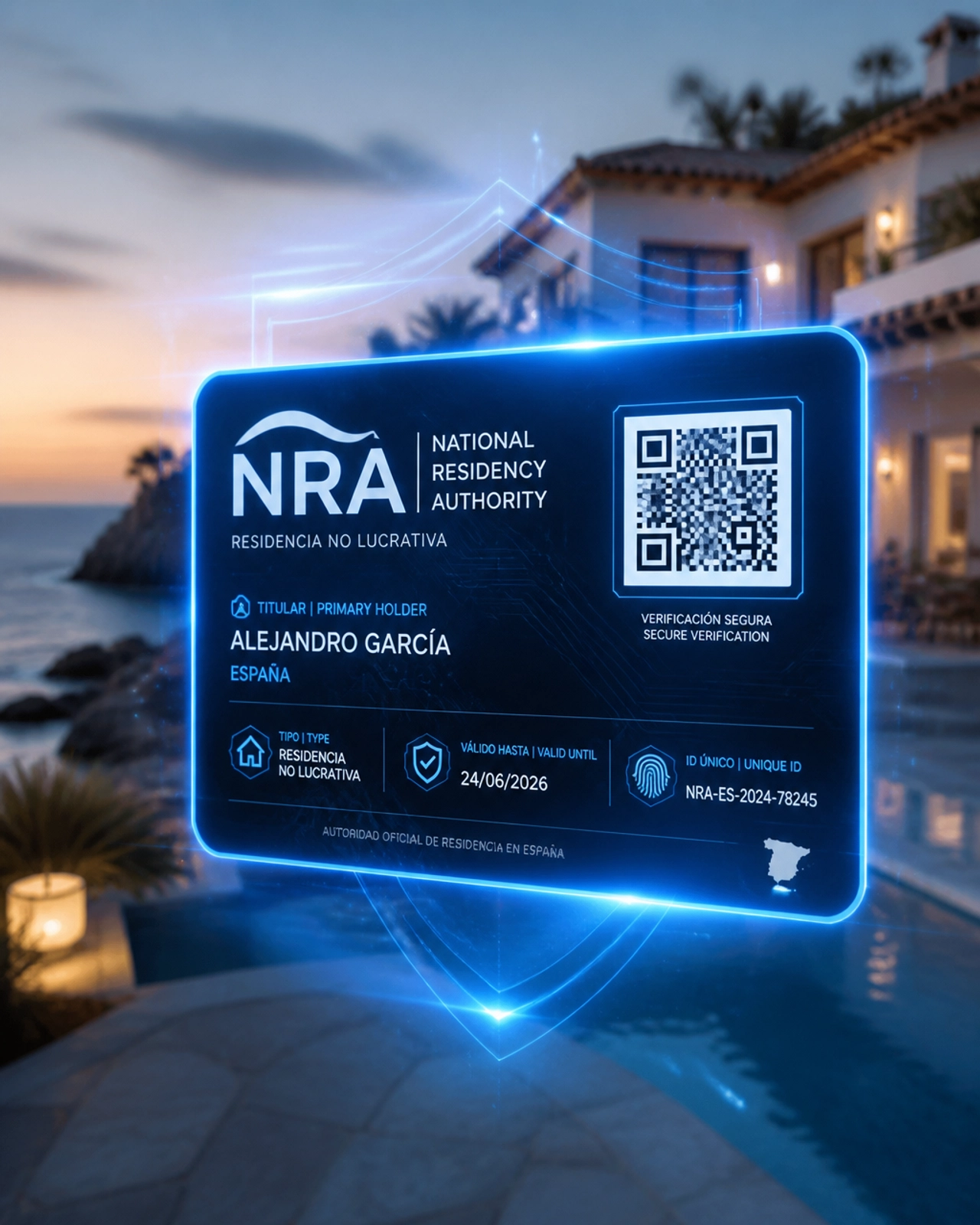
If you own a holiday rental in Spain, you have a massive advantage in the fight against okupas. An active NRA (Número de Registro de Alquiler) and a valid Tourist License act as a legal "shield" for your property.
By registering your property as a holiday rental, you are officially declaring to the Spanish government that the property is active and in use. It is no longer an "empty investment property" prone to usurpación — it is a commercial and residential dwelling.
When you can present an active Tourist License and NRA documentation, you make it nearly impossible for a squatter to claim the property was abandoned. This documentation proves:
- Economic Activity: Establishes the property as a source of income and part of a regulated industry.
- Constant Occupation: Demonstrates that even if you aren't there, the property is frequently occupied by guests.
- Regulatory Compliance: Following all Spanish guest registration laws requires you to be in constant contact with the authorities (SES Hospedajes), creating an undeniable digital trail of activity.
In a 2026 legal dispute, the owner with a digital trail of guest registrations and a valid license will almost always trigger the allanamiento fast-track path, while the owner of an "unregistered" empty flat might get stuck in the slower administrative lane.
Practical Prevention: Building Your Digital Fort
While the law has improved, prevention remains the most effective strategy. If your property will be empty for several weeks between bookings, follow these high-priority steps to ensure you are protected.
Install a Verified Alarm System
Avoid relying on simple "dummy" cameras. Use a verified alarm system connected to a central station. Because these systems are "verified," a break-in signal counts as a flagrant crime in progress. This allows the police to enter the property immediately without waiting for a judicial warrant.
Secure Your Digital Paperwork
Prepare for the worst by having your documents accessible from anywhere in the world. If a break-in happens while you are abroad, you must be able to send your Digital Certificate and ownership deeds to your lawyer or the police in seconds.
- Use a Secure Portal: Store your NRA documents, Title Deeds (Escritura), and recent utility bills in a cloud-based Property Management Portal.
- Establish Immediate Reporting: Ensure your property manager or a trusted neighbour has clear instructions to call the police the moment they see signs of entry.

Keep the Utilities Running
Maintain active electricity and water accounts. One of the key markers of an "abandoned" property used by squatters is the lack of utility service. Ensure your bills are paid via standing order. Under no circumstances should you cut off the utilities yourself if squatters have already entered — this can lead to a "coercion" charge against you. Instead, use the 15-day express eviction process to handle it legally.
The "Inquiokupas" Exception: A Warning for Landlords
Distinguish clearly between a squatter (okupa) and a non-paying tenant (inquiokupa).
- Squatters: People who break into a property they have never had a right to occupy. These individuals are the target of the new 2026 express eviction laws.
- Non-Paying Tenants: People who entered with a legal rental contract but stopped paying rent.
The 2026 updates do not apply to inquiokupas. These cases are still handled through civil courts and can still take significant time to resolve. This is why many owners prefer running their property as a short-term holiday rental rather than a long-term let. With holiday rentals, guests are registered via the SES Hospedajes system, and their stay has a clear, legally defined end date, making it much harder for them to claim "tenant rights."
Conclusion: Peace of Mind Through Compliance
The 2026 anti-squatter laws in Spain are a major win for property owners, but they reward those who are organised. By ensuring your property is fully registered, maintaining an active NRA code, and using a digital management system for guest registrations, you are doing more than just staying compliant — you are building a legal fortress around your investment.
Don't leave your property's safety to chance. Ensure your documentation is ready, your registrations are up to date, and you have the "Rental Shield" in place.
Ready to secure your property's legal status? Start your NRA registration today and ensure your holiday home is protected by the full weight of the 2026 express eviction laws.